
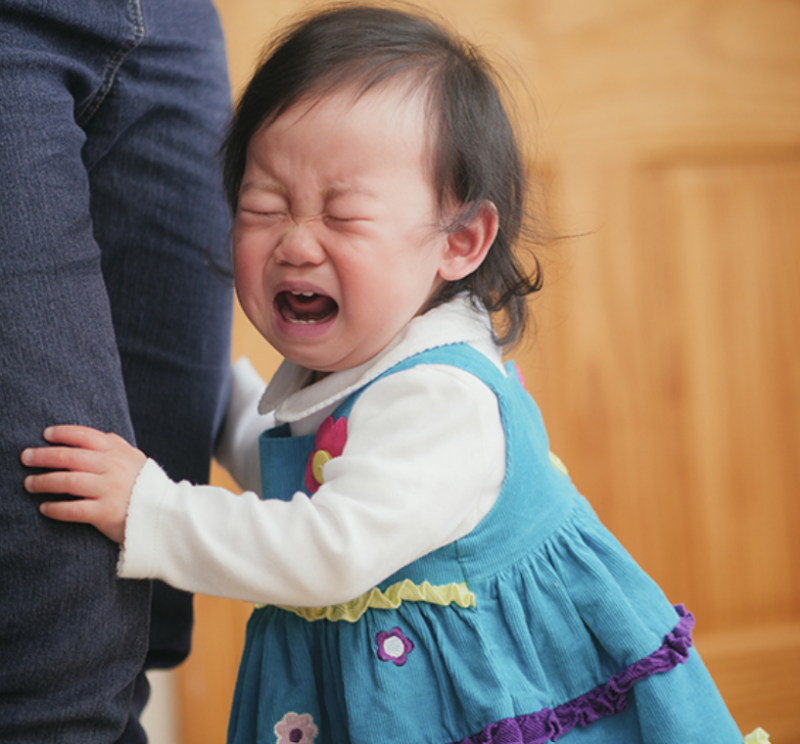
A Tough Goodbye
It happens to almost all of us as parents: You have a happy morning at home, and as soon as you hang the backpack up and set your child down for school, you face tears, reaching arms, and even being followed out the classroom door! Maybe your usually independent baby suddenly wants to be held constantly, or your preschooler begins crying at drop-off after months of easy goodbyes.
If this sounds familiar, you are not alone! Separation anxiety is a normal and expected phase of early childhood, and while it can be difficult for both children and parents, it is also an opportunity to build trust, strengthen relationships, and help children develop confidence in the world around them. We're here to support you and your child during this difficult and often frustrating time!
What Is Separation Anxiety?
Separation anxiety is a child's distress when a parent or caregiver leaves, or when they anticipate being separated from someone who helps them feel safe. For young children, parents and family members are their secure base. These are the people they turn to for comfort, reassurance, and help navigating a world that can sometimes feel overwhelming. When a child becomes upset at separation, they are not intentionally being difficult, manipulative, or challenging. Their behavior often communicates a very real feeling: I feel safest when you are near me, and I'm not sure I'm ready for you to go!
Separation anxiety often begins during infancy, emerging as babies begin to understand Object Permanence between 6 and 9 months of age. It becomes especially noticeable during toddlerhood (12-24 months) and may continue or come and go into the preschool and early elementary years. Its intensity can vary significantly from child to child and often emerges again after big changes like the birth of a new sibling, a move, or a change in family or school dynamics (think differing work hours for Mom, a new classroom teacher, the death of a pet, etc.) Long weekends and school breaks can exacerbate separation anxiety as well. Young children are still developing the emotional and cognitive skills they need to understand separation and manage their feelings. Several factors can contribute to separation anxiety:
A developing understanding of time. Young children do not yet understand time in the same way adults do. Saying, "I'll be back in a few hours," may not offer much reassurance to an infant, toddler or preschooler who cannot yet grasp what "a few hours" means.
A strong attachment to trusted adults. Children naturally seek closeness with the people who help them feel safe. Separation can temporarily disrupt that sense of security.
Big feelings and developing coping skills. Young children experience emotions intensely, but their ability to regulate those emotions is still developing. They may know they feel upset without yet knowing how to calm themselves. Teachers are well-versed in distraction and co-regulation strategies to help young children regain a sense of calm.
Fatigue, hunger, or overstimulation. A tired or overwhelmed child may have fewer resources available to manage the stress of saying goodbye.
Sometimes, there is no obvious reason at all! Children grow and develop in different ways, and their need for reassurance may change from one day to the next. Some children express their feelings loudly, while others become unusually quiet or withdrawn. Both responses deserve attention and compassion.
It's also helpful to remember that a difficult goodbye does not automatically mean a child will have a difficult day. Most children cry or withdraw for a few minutes and then settle quickly into play once their parent has left. Others need more time and support before they feel ready to participate, but the worry almost never lasts for very long. It may return during nap time or at the very end of the day as they anticipate pick-up, but the majority of the day is usually happy and regulated! At the ELS, every classroom has a visual schedule to help children conceptualize the order of events in the day, and when to expect parents to return. This helps ease anxiety over the length of time they are at school and helps them build consistent expectations over routines throughout the day.
How Can Families Help?
The good news is that there are many simple, meaningful ways to help children navigate separation. The goal is not to hide or eliminate eachuncomfortable feeling. Instead, we want to help children experience separation in ways that build trust, confidence, and resilience over time.
1. Acknowledge Your Child's Feelings
When your child cries or clings to you, it can be tempting to immediately distract them or convince them that there is nothing to be upset about. Instead, begin by acknowledging the feeling. You might say, "You really want me to stay. It's hard to say goodbye." Acknowledging emotions does not make them bigger or reinforce the anxiety. Validate the feeling while still maintaining the boundary: "I know you want me to stay. I'm going to work now, and your teacher will help you feel safe."
2. Create a Predictable Goodbye Routine
Predictability helps children know what to expect. Consider creating a simple goodbye ritual that you repeat each day. It could look like:
-
Two hugs and one kiss.
-
A special handshake.
-
Walking to the classroom door together.
-
Saying a familiar goodbye phrase.
-
Waving from a designated window.
The routine itself matters less than its consistency. For example, you might say, "One big hug, and one wave. Then it's time for me to go, and I'll see you after school!" Over time, your child begins to recognize the sequence and understand what comes next. Keep the routine loving but brief. Long, repeated goodbyes can sometimes make it harder for children to transition because they are continually anticipating another departure. The same goes for peeking in or lingering outside the door!
3. Stay Calm and Confident
Children often look to trusted adults for cues about how to respond to unfamiliar or challenging situations. If you appear worried, hesitant, or uncertain about leaving, your child may interpret those signals as evidence that the situation is unsafe. This doesn't mean you need to hide your emotions or pretend that saying goodbye is easy; it simply means offering reassurance through your words, tone, and actions. Try saying, "I know you will have a good day. Your teachers are ready to help you, and I'll be back after school." Remember, if you feel emotional during drop-off, that is normal, too! Parents experience separation feelings just as children do. Give yourself permission to feel those emotions while allowing your child to build a trusting relationship with their other caregivers.
4. Help Your Child Build Connections with Other Trusted Adults
Children feel more comfortable separating when they have developed trusting relationships with the people who will care for them. At school, this might mean a teacher who greets your child each morning and helps them begin a favorite activity. We do our best to make sure there is at least one consistent teacher in both early extended day and in your child's core day classroom. If both core-day teachers are out for any reason, we try to put a familiar float teacher that the children know from teacher lunch breaks in the room so that they always have an adult they know in the room. At home, you might gradually practice spending time apart while your child is cared for by a familiar relative or babysitter. These experiences help children learn that they can feel safe and connected to more than one person.
5. Celebrate Progress, Not Just Perfect Goodbyes
Progress may not look like a cheerful wave and an immediate dash into the classroom. For one child, success might mean walking through the classroom door while holding a parent's hand. For another, it might mean accepting comfort from a teacher after crying. For a third, it might mean recovering more quickly than the day before. Notice and acknowledge these small steps! You might say, "You were sad when I left, and you let your teacher help you. You worked hard through that feeling!" Avoid making children feel that crying is a failure. We want them to know that they can experience sadness and still move through a challenging moment with support. Confidence grows when children discover that they can handle difficult feelings, not when they are expected to avoid those feelings altogether.
Working Together
One of the most effective ways to support a child experiencing separation anxiety is through communication between home and school. If separation anxiety is significantly affecting your or your child's school experience for a long period of time, please reach out for support! Teachers have lots of tricks up their sleeves, and I can also be tagged in to support with body breaks, distraction, social stories and visuals. Parents know their children best. Teachers understand the classroom environment and can observe how children respond throughout the day. Together, these perspectives can help create a consistent, supportive plan. Families and teachers can work together by:
-
Sharing information about changes in routines, sleep, or family circumstances that may affect a child's adjustment.
-
Developing a predictable drop-off routine.
-
Identifying comforting activities, familiar objects, or preferred ways of receiving reassurance.
-
Communicating about how long a child takes to settle after separation, and what helped or didn't hep
-
Celebrating progress and adjusting strategies when needed.
It is also important to remember that adjustment is not always a straight line. A child may make wonderful progress and then experience a difficult morning; that does not mean the progress has disappeared. It simply means your child may need additional support that day! Reach out, as always, if separation anxiety feels too big to handle. We're all in this together!
Add comment
Comments